Critical AI literacies
Co-designing for critical and ethical engagement with emerging technologies and digital media, such as AI tools, social media, games, and apps.
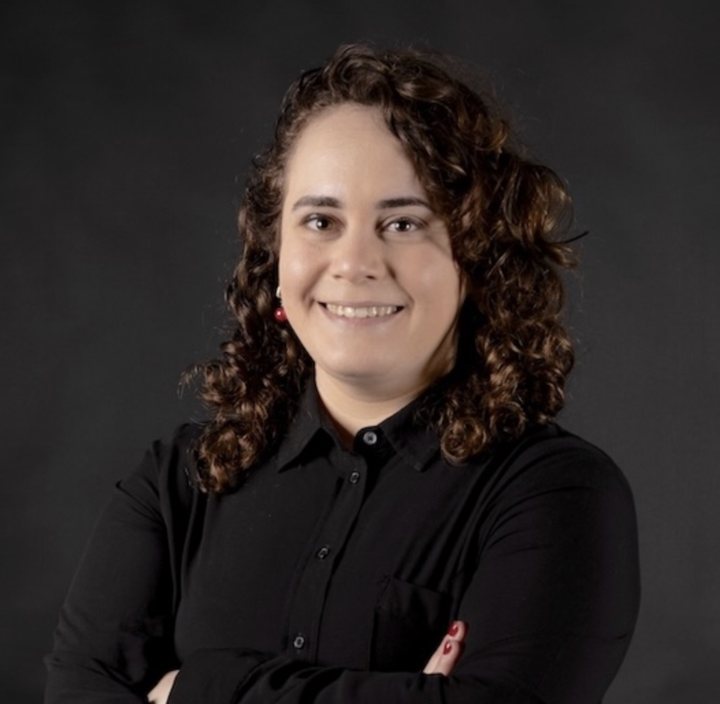
I study and design learning environments and technologies that help people engage critically and collaboratively with AI and digital media. I have worked with learners and educators in the United States and the Middle East.
At the Technion's Faculty of Education in Science and Technology, I lead the Co-Design and Interactive Learning Lab.
Before that, I was a Research Associate at the NSF National AI Institute for Student-AI Teaming at CU Boulder's Institute of Cognitive Science, working on learning sciences, co-design, AI literacies, and equity. I earned my Ph.D. in Learning, Literacies, and Technologies (2021) and my master's in Educational Technology at Arizona State University's Mary Lou Fulton Teachers College. At ASU, I was a Fulbright Scholar, an Interdisciplinary Enrichment Fellow, and a researcher at the Center for Science and the Imagination.
Outside work I take photos on long walks, learn ceramics, play with lettering, and run by the beach. Follow along on Instagram @areejmawasi.
I study, design, and implement learning environments mediated by digital media and technology, for and with diverse learners and communities.
Co-designing for critical and ethical engagement with emerging technologies and digital media, such as AI tools, social media, games, and apps.
How learners develop ethical thinking about science and technology innovations, and connect STEM learning to their everyday lives, realities, and histories.
Involving learners and educators as co-designers of learning environments, and closely analyzing how learning unfolds among people and tools.
My courses bring together sociocultural perspectives on learning, design-based research, digital media, AI literacies, and human-computer interaction.
AI literacies through technical, sociocultural, and critical perspectives, and how AI shapes learning and human-machine interaction across cultures and languages.
Foundations and applications of design-based research for learning environments and educational technology, especially for students from STEM backgrounds.
Current research and practice in digital technologies for learning, in schools, public spaces, and at home.
Beyond the university, I give lectures and facilitate workshops on education, the future of technology, and design. See services.
Selected work in research, curriculum, and design, inside and outside the university.
An Arabic-language curriculum unit in critical AI literacy. Learners start from the technologies in their daily lives, then explore self-perception, identity, and representation; bias in AI tools, including gender bias; and how digital maps can leave places out, mapping missing places of their own. The unit ends with learners designing and telling their own stories through digital media and AI tools.
A research study in which community-based educators working in NGOs and informal education take part in a co-design process. Co-design here is a learning process we go through together with participants: using design thinking and digital storytelling, we explore how AI and algorithms shape everyday decisions and ways of thinking, and imagine how digital media and AI tools might help communities tell their own stories differently.
An ongoing exploration in art-based methods. Over months, I return to one small table and document it across modalities, including sketching and photography: the objects that come and go, and what surrounds it. I use it to explore noticing, perspective taking, and orientation, with ideas from Sara Ahmed and John Berger in the background.
Interested in collaborating on a project like these? See services.
My work moves between academia and the field. My research, teaching, and design work have been put into practice through digital media, museum learning experiences, educational tools and kits, game design, and design thinking workshops. I also have extensive experience in instructional design and curriculum development. I have lectured at many universities and venues internationally. I offer the following, online or in person.
I'd be glad to hear about your project or request. Send me a short note, and I'll reply with how I can help.
Email: am [at] areejm [dot] com · Instagram @areejmawasi
يتنقّل عملي بين الأكاديميا والميدان. طُبّقت أبحاثي وعملي التربوي والتصميمي على أرض الواقع من خلال الإعلام الرقمي، وتجارب تعلّم في المتاحف، وتصميم أدوات ورزم تعليمية، وتصميم ألعاب، وورشات تفكير تصميمي. كما أنّ لديّ خبرة واسعة في التصميم التعليمي وتطوير المناهج. قدّمت محاضرات في جامعات ومحافل دولية عديدة. أقدّم الخدمات التالية، عن بُعد أو وجاهيًا.
يسعدني أن أسمع عن مشروعكم أو طلبكم. أرسلوا لي رسالة قصيرة، وسأردّ عليكم بما يمكنني تقديمه.
البريد الإلكتروني: am [at] areejm [dot] com · انستغرام @areejmawasi
Reflections on books I read between languages, places, and ideas.
This short book brings together three essays by Umberto Eco: on fascism and its features, on censorship and silence, and on European identity.
In the first essay, Eco walks us through the traits of the fascist regime he lived under, which shaped his childhood in Italy: its focus on customs and tradition, nation and language; its rejection of modernity as a threat to tradition; its rejection of science and reason; its promotion of superiority, hierarchy, power, and heroic narratives; and its flattening of language and spread of propaganda, what George Orwell called Newspeak in 1984.
He ends the essay with a memory that makes us think about how fast things change when a regime collapses. On the morning of 27 July 1943, as a boy, he heard on the radio that fascism had fallen and Mussolini had been arrested. His mother sent him to buy a newspaper, and at the newsstand he found papers with new names, each saying something different. The one he bought carried a message signed by five or six political parties. Until then he had believed that every country had only one party, and that Italy had only the National Fascist Party. Now he was discovering that his country could have many parties at once. The message celebrated the end of dictatorship and the return of freedom of speech, of the press, and of political association. He had never read words like freedom or dictatorship before, and he describes those words as a kind of rebirth.
In the essay on censorship and silence, Eco reminds us that despite the power of media and the internet, we still hold power in passing information among ourselves, and that includes the power of silence. He observes that people living under even the most censorious tyrants have always learned what was happening in the world through word of mouth. He closes by proposing a semiotics of silence, a closer study of how silence works in communication. I read this as learning how and when to use silence under oppression, and how to make music through it.
In the third and final essay, “We Are Europeans,” Eco turns to European identity, its diversity and differences. He argues that it has no single form, such as the political one represented by the European Union, and he discusses its struggle to accept pluralism and difference.
I couldn't sleep well. I was anxious about work, and maybe it was the coffee too. So I escaped into reading. I picked up If Cats Disappeared from the World and read it in one breath, until I fell asleep.
This isn't a review of the novel. These days I feel that books find their readers wherever they are in life. A novel may seem shallow to one person and be the whole world to another. It may feel deep to one reader and be a passing read for someone else.
The novel read smoothly and quickly, as quickly as the few days it covers, as quickly as sudden death. For a moment that made me want to slow down and wait for what would disappear next. I wondered how I could take in these stories, and the vanishing of things, if I read this fast, like someone trying to catch up with life and its details, or with something before the end.
For all its simplicity, the novel goes deeper than a confrontation with disappearance. The deeper question it asks, I think, is this: what if the simple, everyday things disappeared, and the people we love? Cinema? Time? Phones? People? Relationships? Walking, and running to catch the bus? Family and loved ones? Cats? What if we disappeared? We take all of these for granted, yet they give our days their deepest details and meanings, with all the complexity of our relationships to them.
The novel holds up many mirrors to the details that seem routine in our lives. Like the boring TV series your mother insists on watching in the middle of the house. You don't care about it for a second, yet you sit beside her, and you value the noise in the living room over the silence of death.
It also led me to think about the places I have lived: cities, houses, and neighborhoods. The details of our lives change from place to place. The sounds change. What we see through the windows changes, and what we hear through them. Geography and climate change. All of this differs from country to country, from one city or village to another, from neighborhood to neighborhood, and even inside our homes, from room to room and window to window. The voices of people and animals passing through them change too: neighbors and their footsteps on the stairs, the sound of the front door opening, people whispering at midnight, smells and their hours and days.
The presence of cats in our lives changes as well, how they look and how they are with us. Right now, cats seem to me like the center of the universe. I realized that the only city where I lived without noticing cats around me was Boulder, Colorado. Free squirrels in the trees and dogs inside homes took their place. The universe felt truly lonely then, and I lived my deepest experience of being a stranger, especially in the cold, snowy months. It is beautiful how novels let us search our own experiences through story, and remember parts of our lives and of ourselves.
Everyday details can seem meaningless. But in the moments when we have to face death, the smallest detail becomes a will to live. A text message, or a phone, may be the whole world to someone facing their end or saying goodbye to this world.
The novel does not ask what would happen if death disappeared. It meets that question with its opposite: death is the way of life, so what can we create within it? Isn't the moment of questioning death also a moment to see its other face, life in all its fullness? Over seven days, the narrator gives us a chance to remake the self by imagining loss and the hero's coming death. He also shows us that the universe within us can reshape itself and see the world differently, despite the tension between the will to live and facing death. And on the last day he declares rest, as God did after creating the universe.
A note on process. My notes on this book were scattered. To organize them, I talked through the main ideas with ChatGPT and NotebookLM, then edited the summary. The ideas are Maté's; the selection and final edits are mine.
Maté's starting point is that what our culture treats as normal is not necessarily healthy. He sees chronic illness, physical or mental, as a feature of how our society works rather than a breakdown in it. Five ideas from the book stayed with me.
The diagnosis can sound harsh, but it is an invitation to awareness and healing. Perhaps "normal" is not something to return to, but something to move beyond, toward a more human and honest life.
This short book gathers four texts that meet at the crossroads of writing, political language and what it carries in communication, and the meaning of democracy as opposed to fascism. In time, they take us from the beginning to the middle of the twentieth century.
In “Why I Write,” Orwell names four reasons for writing: the writer's selfish drive, the aesthetic element, the urge to document, and the political purpose.
In “The Lion and the Unicorn,” written during the Second World War, he analyzes the English character and calls for the British Empire to become a democratic socialist system, to resolve both its internal crises and its relations with the world.
In the third text, “A Hanging,” Orwell describes the execution of an Indian man in Burma, decided through an administrative, bureaucratic process and carried out by British officers, Orwell among them. He watches this human being closely, and sees in him, until his last breath, everything that human movement means. The execution went ahead. Afterwards, their bureaucratic work done, the officers sat drinking and laughing together.
“Politics and the English Language” asks us to pay attention to the ideological messages carried in language and in the way it moves.
In When the Body Says No, Gabor Maté shows how emotional experiences in childhood, especially trauma and feelings that were never expressed or processed, can build up over time and later surface as physical illness or as struggles with mental health. Across nineteen chapters, he reads medical cases alongside the inner lives of his patients: their relationships with family and work, their beliefs, and the way they treat others and themselves. Through these stories he introduces ideas such as family responsibility, emotional development, suppressing and freeing the true self, attachment, autonomy, and the defenses we build to protect ourselves. Emotions we push down, such as anger, sadness, or the need for support, do not leave the body. They are stored, and they can return as chronic pain, heart disease, or muscular and hormonal disorders. Many of his patients described their childhoods as normal, until they realized they had learned to ignore their own feelings to protect or please their parents. Maté treats anger as a signal of our boundaries rather than as violence, something to feel and regulate rather than suppress. He also separates asking others for help from always giving while forgetting our own limits. Shaped by his family's experience of the Holocaust, he argues that political, social, and economic conditions affect our health as much as parenting does. The book closes with seven principles of healing: acceptance, awareness, anger, autonomy, attachment, assertion, and affirmation. For me, its central lesson is to listen to our bodies, because sometimes the body cries out when we cannot find the words.
Over the past two years, moving between geographies and languages has been a challenge. I often felt caught between many worlds and words, tired from speaking, thinking, and writing in three languages every day, and unsure how or where to begin writing. When my writing routine gets hard, I try to widen my tools, strategies, and reading, including art-based methods that help me find a flow. Sometimes this works and sometimes it doesn't. At some point I understood that I don't need a fixed routine to write. Writing works best for me as an everyday practice, woven into the other things I do each day.
Recently, two books by Haruki Murakami helped me reflect on the writing process, its habits, and the learning that happens while writing. The first, Novelist as a Vocation, which I read in its Arabic translation (مهنتي هي الرواية), traces his path to becoming a novelist. He reflects on the professional side of writing while sharing his personal view of the process, including a chapter on wellness and running. That chapter brought me back to a book I had read earlier, What I Talk About When I Talk About Running, where he explores how running shaped his life and his writing routine. In both books, Murakami describes building a life around writing and dividing his time so that his energy lasts and writing stays enjoyable. Just as the body accepts running gradually, he explains, a person becomes a writer gradually, through focus, development, and learning. In one passage (p. 101), he describes running as a good time to memorize a speech: while his legs move almost on their own, he puts the words in order in his mind and tests the rhythm and sound of each sentence, and with his mind elsewhere he can keep a natural, untiring pace for a long time.
Notes from the introduction. Design and algorithmic bias operates at three levels: personal, community, and institutional.
At the personal level, it shows up in algorithmic features and rules that limit how people express their identities, such as gender or the use of certain languages and vocabulary, and that can put vulnerable people with nondominant identities at risk.
At the community level, it works through policies, community guidelines, norms, content moderation, click tracking, and other engagement measures that either promote or shadow-ban certain content and users. Content moderation of hate speech is one example: someone has to set the criteria for what counts as hate speech and what falls under freedom of speech.
At the institutional level, it centers on the priorities of companies and funding agencies, the policies of firms, and the practices of design and programming.
Together, these three levels give a layered understanding of what users can do to push back against the systemic oppression built into algorithms and design processes.
This book is about the unfair social impact of algorithms on many areas of our lives. Cathy O'Neil, a data scientist and mathematician, writes about big data and the models built from it, which end up reinforcing economic and social inequality. Across ten chapters, she explains how mathematical models are built from everyday activities: playing sports, going to the store, studying at a school or choosing a university, using social media and the internet. She shows how much data is collected about us, how it is used to model our behavior, and how those models are then exploited for advertising, political, or economic ends, with consequences that fall hardest on the most marginalized people in society. The book came out in 2016, but its questions matter even more today, as AI tools and applications spread through our daily lives. Her chapters cover targeted advertising, finding a job, credit scores, health data and its effect on insurance, and the threat data poses to democracy.
At the end of the book, O'Neil stresses transparency and helping people understand how their data is used. She calls for privacy policies that stop data from being used for purposes its owners did not agree to; for protecting data and weighing the harm of passing it to parties that could put people at risk; and for the criteria and decisions behind data-driven models to be clear and open to the public. As a data scientist and mathematician, she also stresses that alongside destructive models that are neither neutral nor accurate, there are models that change people's lives and help lift them out of poverty and inequality. The question remains how we use them, and for what purpose.
What also caught my attention was her sharp critique of the capitalist claim that the free market will correct itself. In her view, that is unlikely while giant companies control our data, and while the realities the claim is applied to differ from the mathematical models built to describe them.
These issues should concern all of us, as citizens anywhere, and as people whose data is violated every day. In my view, this is where the real digital divides lie, not in whether people use technology or not.